

CAUTIONSpoilers ahead. This post includes solution details (and flags).
EHAX CTF 2026 was very challenging, but also really fun. Some tasks looked scary at first, but they became manageable after I slowed down and focused on evidence.
Here are four writeups I enjoyed the most.
[Forensics] Quantum Message
The prompt looked like a physics question, but the real clue was: “who did he call?” and a weird pair of numbers.
At first I treated the file like normal audio. Then I opened a spectrogram and noticed something that looked too clean to be random: the sound was made of blocks, and each block had two stable tones.
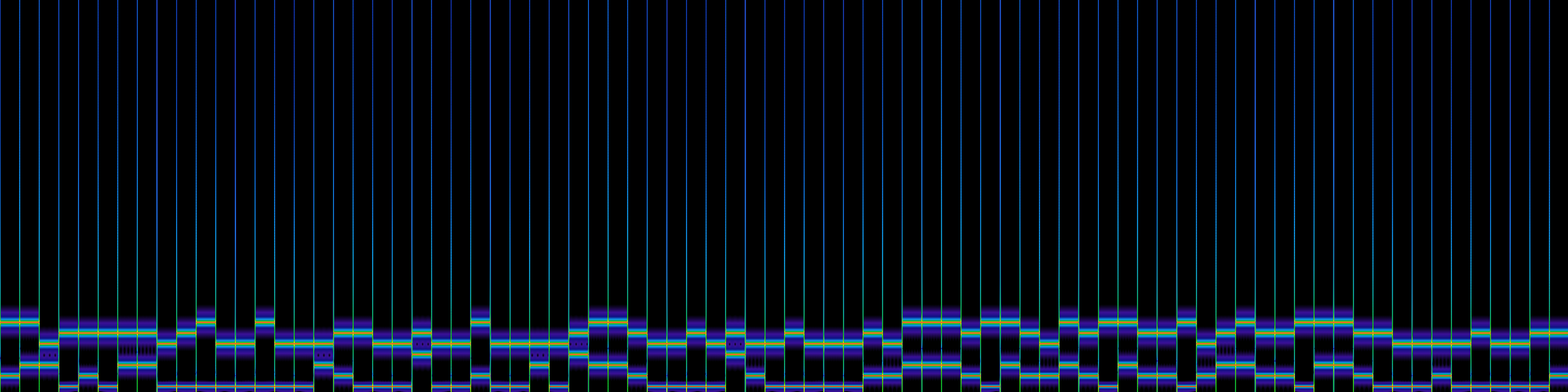
A few extra details
- It was a mono WAV at 44.1 kHz and about 82 seconds long.
- The tone blocks were separated by tiny silence gaps (around 20 ms). I counted 80 blocks, so it felt like a clocked symbol stream.
- The frequencies clustered into stable bins (3 low tones x 4 high tones = 12 symbols).
low bins: ~301, ~902, ~1503high bins: ~2104, ~2705, ~3306, ~3907What worked
- Split the WAV into segments using the short silent gaps.
- For each segment, extract the two dominant frequencies.
- Treat each (low, high) pair like a keypad symbol (similar idea to DTMF, but custom bins).
- Convert the symbol stream into digits, then parse the digits as concatenated ASCII codes.
IMPORTANTThe final ASCII parsing had exactly one valid solution, which was a great sanity check.
Flag
EH4X{qu4ntum_phys1c5_15_50_5c4ry}
Concept map
flowchart TD A["Triage WAV + read the hint"] --> B["Spectrogram shows clean dual-tone blocks"] B --> C["Split audio by short silence gaps"] C --> D["Extract 2 dominant tones per block"] D --> E["Quantize tones into low/high bins"] E --> F["Map bin pairs to keypad symbols"] F --> G["Convert symbols into a digit stream"] G --> H["Partition digits into ASCII codes"] H --> I["Unique plaintext decode"] I --> J["Validate EH4X flag format"][Misc] Entropic Labyrinth
This challenge was a Windows game (game.exe) with a “brainrot” hint. The fastest progress came from a simple question: is this a native game, or a packaged script?
Strings gave it away: it looked like a PyInstaller bundle. So instead of reversing assembly, I switched to extracting the embedded Python code.
One nice part here is that the expected output format was clear (EH4X{...}), so I could keep my search honest.
What worked
- Identify PyInstaller fingerprints in the binary.
- Extract the embedded
gamemodule / code object. - Find the encoded constant (a hex string) and the decryption function.
- Try small reversible transforms until the output starts with
EH4X{.
In the end, it was just a single-byte XOR.
encoded hex: 525f234f6c50235a24482644485545275c24596akey: 0x17Flag
EH4X{G4M3_1S_BR0K3N}
Concept map
flowchart TD A["Start: Windows game executable"] --> B["Strings show PyInstaller fingerprints"] B --> C["Extract embedded Python payload"] C --> D["Find encoded hex constant"] D --> E["Try simple reversible byte transforms"] E --> F["Stop when output starts with EH4X{"] F --> G["Recover XOR key and plaintext flag"][Pwn] The Revenge of Womp Womp
This one was the hardest for me, but also the most satisfying. The program implements a tiny bytecode-like “heap VM” where you can allocate, free, show, and edit chunks.
Two small bugs were the start of everything:
- After
free, the program did not clear the pointer (so I could stillshow/editfreed chunks). - The bytecode parser advanced by the requested edit length, not the actual copied length (so I could desync the parser).
From those, I built two early leaks that made the rest possible:
- a libc leak from unsorted-bin metadata
- a heap leak from freed chunk headers
What made it tricky
I reached code execution, but the usual endgames failed.
WARNINGSeccomp blocked
execve, and it also restrictedread(fd, ...)for normal file descriptors.
So I changed the goal: instead of “spawn a shell” or “ORW”, I used a path that avoids read entirely:
open("./flag")mmap(fd, ...)write(1, mapped, ...)
That was the moment it finally clicked.
TIPOne detail I wish I noticed earlier: for FSOP, the important target was the program’s imported
stdoutpointer cell (not the libcstdoutsymbol).
Flag
EH4X{w0mp_g0t_w0mpp3d_4g41n}
Concept map
flowchart TD A["Heap VM bytecode"] --> B["Free keeps stale pointers (UAF)"] A --> C["Edit cursor advances too far"] B --> D["Show after free leaks libc"] B --> E["Show after free leaks heap"] D --> F["Compute libc base"] E --> G["Compute heap base"] F --> H["Largebin write + unsafe unlink"] H --> I["Rewrite pointer table in .bss"] I --> J["Point stdout import to fake FILE"] J --> K["FSOP wide path"] K --> L["setcontext trampoline"] L --> M["open flag file"] M --> N["mmap file"] N --> O["write mapped bytes"] O --> P["EH4X flag"][Rev] ghostKey
ghostKey is a crackme-style reverse challenge. The binary wants a 32-byte printable key, runs many checks, and only then does a final AES-based verification.
The nicest part: it was a Go binary and it still had useful symbol names, so I could map the validation pipeline without a full decompiler.
The key was not “guess the key”. It was to understand the structure:
- length must be 32
- all bytes are printable ASCII
- several math checks (pair sums, column sums, tag XOR)
- one LFSR-like update that must land on a fixed value
- a final AES-CBC stage where the decrypted plaintext must start with
crackme{
What worked
- Recover the order of checks (length, charset, small math constraints, an LFSR-like update, and an AES stage).
- Turn the validator into a structured search instead of brute force.
- Debug my own solver carefully.
Honestly, the debugging was the real fight.
IMPORTANTA wrong solver is more dangerous than a hard challenge. I had to fix two mistakes before the real key finally showed up.
Key
Gh0stK3y-R3v3rs3-M3-1f-U-C4n!!!!
Flag
crackme{AES_gh0stk3y_r3v3rs3d!!}
Concept map
flowchart TD A["Static Go crackme"] --> B["Recover check order"] B --> C["Turn checks into constraints"] C --> D["Search reduced space (not brute force)"] D --> E["Fix solver bug: family bounds"] D --> F["Fix solver bug: full sweep seeding"] E --> G["Recover 32-byte key"] F --> G G --> H["AES-CBC verify"] H --> I["Print crackme flag"]